How to avoid burning your skin when using a curling iron? A complete guide to safe usage techniques.

Curling irons are an indispensable tool in modern styling. Almost every day, women use them to create their ideal curls in front of the mirror. However, the high temperature of a curling iron can pose a hidden danger of burns if not used properly. Don’t worry, today we’ll talk about how to use a curling iron safely, achieving beautiful styles without injury.
I. Understanding the Risk of Burns: Why Curling Iron Can Damage the Skin
Many people think that being careful is enough, but in fact, there are more reasons why curling irons can burn the skin than you might imagine.
- Too high a temperature: Common curling irons are typically 180°C–200°C, which means that even slight contact with the skin can cause redness or even blisters.
- Operational errors: slipping, hair being wrapped too tightly, or being too close to the skin—these small details can all lead to burns.
- Lack of protection: The risk is naturally greatly increased if heat-resistant gloves are not worn or heat protection spray is not applied.
- Hasty styling: Many people curl their hair while scrolling through their phones, often resulting in frequent minor burns.
Therefore, understanding these risks is the first step in avoiding burns.
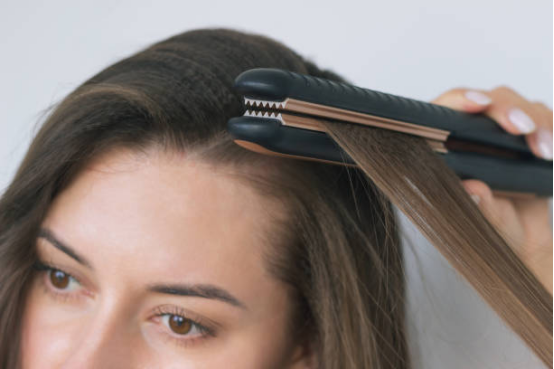
II. Precautions: Preparations for Safe Use of Curling Iron
1. Read the instruction manual and familiarize yourself with the equipment.
Each curling iron brand and model has slight differences. First, understand the switch, temperature control, cold junction, and heating time to avoid operational errors.
2. Use heat protection spray
Spraying a layer of heat protectant on your hair can not only protect the hair strands but also reduce the risk of sunburn to some extent.
A tip: Shake gently before spraying, and don’t spray too much at once to prevent your hair from becoming oily.
3. Wear heat-resistant gloves
This is not a trivial item, especially for beginners or those who curl hair quickly. Heat-resistant gloves can protect your hands and wrists from accidental burns.
4. Ensure hair is dry and smooth.
Wet, curly hair is more prone to uneven heating and can easily burn the skin. Blow-dry and comb your hair before using a curling iron ; this step is absolutely essential.
5. Partitioning should be done slowly.
Divide your hair into front, middle, back, and left/right sections, and curl a small section at a time. This is both safe and ensures an even curl.
Tip: Use clips to secure the hair you’re not working on to avoid getting flustered.
6. Adjust the temperature
Fine or damaged hair is best suited to a lower temperature, while coarse hair can be slightly warmer. The principle is to use the lowest temperature that achieves the desired effect, which is both safe and energy-efficient.
III. Operating Techniques: Practical Methods to Avoid Burns
1. Hold the cold end firmly.
When curling hair, try to hold the cold end (insulated part) of the curling iron, keeping your hands and skin away from the heated area.
Beginners can practice with a wig first to find the most comfortable grip.
2. Maintain a safe distance between hair and skin.
When wrapping your hair around your face, neck, or ears, especially sensitive areas, avoid doing so. Leave 1–2 centimeters of space to reduce the risk of accidents.
3. Control the heating time
Each section of hair should ideally remain on the curling iron for 10–20 seconds; holding it for too long can burn the hair or even the skin.
Tip: Use a stopwatch or your phone to remind yourself to avoid unconsciously holding the iron.
4. Use a temperature lock (if applicable)
Some curling irons support a temperature lock to prevent accidental temperature changes. Enabling this makes styling safer.
5. Let the hair cool after curling.
After curling a section of hair, let the curls cool naturally before touching them to prevent burning your fingers.
6. Stay focused
Don’t curl your hair while scrolling on your phone, and don’t mess around with your hands while watching TV. Focusing on your work can significantly reduce the chances of getting burned.
IV. Emergency Treatment: What to do if you get burned
Even with caution, minor accidents can still happen. Here are a few emergency methods:
1. Immediately disconnect the power and apply a cold compress.
Unplug the curling iron and apply cold water or a cold towel to the burn for 10–15 minutes.
Note: Do not apply ice directly, as the cold may damage the skin.
2. Clean the wound
Clean the burned area with a mild detergent, avoiding harsh cleaning products. Then gently pat dry.
3. Apply protective cream
- Paraffin wax/Vaseline: Forms a protective layer to prevent friction.
- Antibacterial ointment: Reduces the risk of infection.
4. Cover the wound
Cover with clean gauze or dressing to avoid further friction.
5. Relieve pain
If the pain is significant, you may consider using over-the-counter medications such as ibuprofen.
6. Observe the recovery process.
Do not pop the blisters yourself. If there are signs of infection (redness, swelling, discharge), seek medical attention promptly.
7. Sunscreen and skincare
During the healing period, the skin is fragile, so avoid direct sunlight. You can use physical sunscreen and continue to apply petroleum jelly to help with healing.
V. Develop good habits: Long-term safe use of Curling Iron
- Clean the curling iron regularly: remove residual styling products and reduce burns.
- Allow time for styling: Don’t rush the styling process; taking your time is safer.
- Replace aging equipment: Curling irons with damaged wires or abnormal temperature control should be replaced in time.
- Practice technique: Beginners can practice on a wig first. The higher the proficiency, the fewer accidents will occur.
- Safe storage: After use, allow the curling iron to cool completely before placing it on a heat-resistant mat.
VI. Conclusion
While curling irons are a great hair styling tool, they also pose a risk of burns. Mastering preventative measures, operating techniques, and emergency treatment can greatly reduce the chances of accidents.
Key points:
- Prevention is key: heat protection, heat-resistant gloves, and zoned operations.
- Pay attention to the operating details: hold the cold end firmly, control the heating time, and stay focused.
- Emergency treatment: Apply cold compress immediately, apply ointment for protection, and observe for recovery.
By incorporating these tips into your everyday styling routine, you can enjoy the beautiful curls from a curling iron while protecting your skin.
Remember: slower is safer; more relaxed is more natural.